













.png?noresize&width=397&height=365&name=CPDmember%20(1).png)
As part of the launch of Ventro Group’s new Air & Water division, our recent Managing Air & Water Compliance: What Good Looks Like in Practice webinar brought together industry experts to explore the realities of managing air and water compliance across the built environment. The session focused on the key risks associated with air and water systems, practical steps to achieve compliance, and what organisations can do to take a more structured approach to protecting their buildings, occupants and assets.
Covering topics including TM44 inspections, TR19 standards, duct cleaning and Legionella management, the webinar generated a number of insightful questions from attendees. Below, we've compiled the webinar Q&A, along with additional guidance from our speakers.
 Nick Barsby, Lead Consultant, NJB Associates
Nick is an experienced Legionella consultant and water compliance specialist. Drawing on extensive industry experience, he guided attendees through key areas of water safety management, including Legionella risk assessments, legal responsibilities, testing requirements and the importance of engaging competent, accredited support.
 Roy Bedford, Director, Air & Water Compliance, Ventro Group
Roy leads Ventro Group’s Air & Water Compliance division and specialises in helping organisations understand and meet their responsibilities relating to air quality, ventilation systems and associated compliance requirements. During the webinar, Roy shared practical insights on TM44 inspections, duct cleaning and TR19 standards, helping attendees understand what good air compliance looks like in practice.
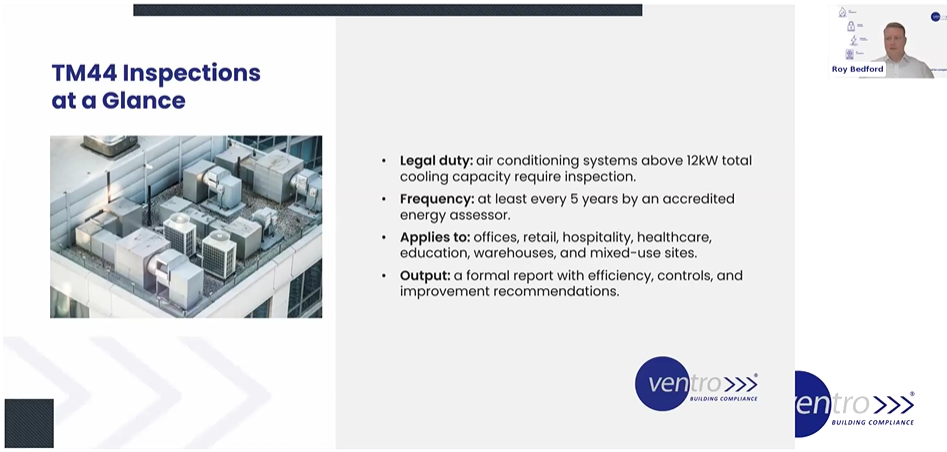
Q1: What records should organisations keep to demonstrate TM44 compliance if they're audited?
To demonstrate compliance during a TM44 audit, organisations should retain a valid TM44 inspection report, evidence that the report has been lodged on the government's official register, and supporting maintenance records for the air conditioning system.Q2: How to correctly prioritise remedial works if multiple risks are identified?
It's a great question. At Ventro we always recommend that organisations should prioritise works using a structured, risk-based approach rather than addressing issues in the order they were identified or by cost alone. Immediate life safety risks should always take precedence, followed by defects that could result in legal non-compliance, enforcement action or significant operational disruption. Consider the likelihood of failure, the potential consequences if the issue remains unresolved, the criticality of the affected system or asset, and any vulnerable occupants who may be at greater risk. Dependencies between remedial works should also be considered to improve efficiency and minimise disruption. By documenting this assessment and focusing resources on the highest-risk issues first, organisations can demonstrate a proportionate, defensible approach to compliance while making the most effective use of available budgets.
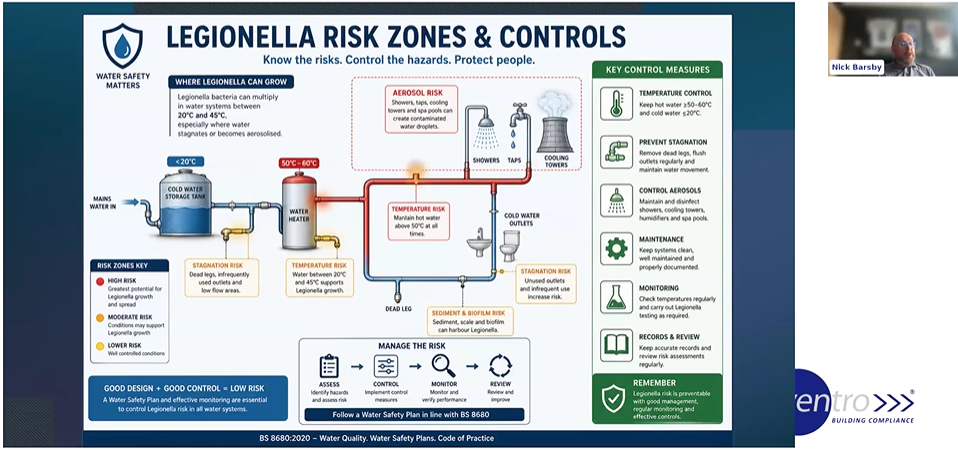
Q3: How often would you advise the LRA to be reviewed if there have been no significant changes to the water system?
-
Duty Holder and Responsible Person - have they changed?
-
Guidance - any new guidance - BS, HSG, HSE, HTM, ISO
-
Staff Training - have we kept it up to date?
-
Staff Competence - have we maintained this records and checks?
-
Monitoring - have all results passed?
-
Inspection - have we identified any issues?
-
Remedials - have we completed any?
-
Little Used Outlets - any new ones or removed any?
If all of these show no change then document it; put a record together and put it with your report and review again in 6 months.
If this record is made and maintained and is correct and a true reflection of the system, then there is justification to not undertake a new LRA. Over time the staff changes and guidance changes (if nothing else) will trigger a new LRA.
Please remember though, the risk assessment is a one off event and while all risk assessors look at the the same building and system, a new set of eyes (or more training if its the same risk assessor) may help then identify a risk that they previously overlooked or were not shown on the original assessment.
Q4: What would say the most common mistake is when maintaining water systems? What measures would you put in place to mitigate them?
Flushing is the biggest risk. It is often the simple tasks that errors occur on. When these errors occur the risk increases.
I often quote the Everyone, Somebody Nobody Anybody poem in this point.
There was an important job to be done and Everybody was sure that Somebody would do it.
Anybody could have done it, but Nobody did it.
Somebody got angry about that because it was Everybody’s job.
Everybody thought that Anybody could do it, but Nobody realized that Everybody wouldn’t do it.
It ended up that Everybody blamed Somebody when Nobody did what Anybody could have done.
- Charles R. Swindoll
The point here is that a simple task, done poorly, is often the root cause of a major issue. Yes, there can be other factors and sometimes in complex systems the remedial works can be extensive; but get the basics right and your starting off on the right foot.
Q5: I work for housing within a local government, I have been tasked with managing the legionella side of things and which I am new to. One thing I am struggling to understand is where does water hygiene stop and it becoming an engineering department issue for example water temp is too hot or a Kemper system not working correctly?
Silos are an issue. Hopefully the talk gave you an idea that communication is key. My advice here is to start to build those relationships and look to form a Water Safety Group - there is a british standard on this (BS8680) and plenty of good advice with a bit of googling….
I’d start by getting all departments together and outlining where everyone feels there role starts and stops. At some points there will be natural cross-over. At these points we need good, solid and clear communication pathways so that everyone knows who to call when things go wrong or when something just doesnt look right. If you set regular meetings up with these stakeholders the relationships will grow and communication comes more naturally.
Remember the old Bob Hoskins BT ad - its good to talk - make sure you talk to the stakeholders and other departments. Agree an agenda for meetings. Keep minutes of those meetings. Make sure that all actions are tracked.
The more you engage the better the end output will become.
_____________
Effective air and water compliance is about far more than meeting regulatory requirements—it's about creating safer, healthier environments and proactively managing risk. We would like to thank everyone who attended the webinar and contributed their questions.
The discussion highlighted the importance of taking a structured, proactive approach to managing air and water systems, ensuring that compliance activities not only meet legal obligations but also support the safety and wellbeing of building occupants.
For organisations seeking expert support, Ventro Building Compliance provides specialist solutions across air, water, fire and building safety disciplines, helping clients navigate complex compliance requirements with confidence.
If you were unable to attend the webinar or would like further guidance on any of the topics discussed, our team would be delighted to help.
And keep an eye out for our next exciting announcement, as we prepare to launch a new service designed to further support organisations in managing their building compliance responsibilities.