













.png?width=397&height=365&name=CPDmember%20(1).png)
Building safety legislation continues to evolve at pace, with 2026 bringing further regulatory updates that will have a direct impact on how buildings are designed, managed and kept safe. From clarifications around compliance responsibilities to growing concerns over emerging risks, staying informed has never been more important for dutyholders and industry professionals alike.
During our Building Safety Legislation Updates 2026 webinar, our live Q&A explored key questions from across the sector. Robert Thilthorpe shared insights on the latest legislative developments and how FIA guidance on lithium‑ion battery safety is shaping regulatory priorities and industry practices.
 Robert Thilthorpe, FIA
Robert joined the FIA team in 2002 having previously worked for BSI being responsible for National, European and International Fire Committees for fire extinguishing (FSH/18, CEN /TC191), fire detection and alarms (FSH/12, CEN /TC72), Fire Brigade Equipment (FSH/17, CEN /TC192) Portable Fire Extinguishers (FSH/2) and was one of the founding members of CEN/CLC/TC 4.
Robert remains the current Chair of FSH/18 Fixed Fire Fighting Systems and CEN /TC191 Fixed Fire Fighting Systems, FSH/16 Hazards to life from fire, FSS/0 Services in fire and security and convenor of ISO/TC21/SC8/WG5 which is responsible for ISO 14520-1 Gaseous extinguishing systems and of ISO/TC21/SC8/WG8 which is responsible for ISO 6813 CO2 extinguishing systems.
Q1: What are you doing with regards to PV fire safety as Hospitals are investing in this and 1 fire has already happened in Bristol?
Research with BRE, the BSR is also doing fire testing on PV Panels.Q2: What are people's thoughts on Fire XO extinguishers? General for all fire including lithium batteries?
Testing shows that water-based media have the most effect on limiting thermal runaway propagation so anything which enhances the water will be of benefit, work is underway on EN 3-11 that will provide a fire test to confirm the effectiveness of portable fire extinguishers on a battery fire.
Q3: One of the main concerns I have on the lithium-ion batteries is the toxic nature of the smoke and how quickly it spreads?
Q4: How do you rationalise Equalities Act (mobility scooter) demands against the lithium battery risk. which set of legislation takes precedence?
Q5: Boeing used containment and external venting for the Li-ion battery runaway thermal risk on the 787 (after several fires). Is this a likely solution for buildings with Li-ion infrastructure?
Q6: Will Lithium batteries, because of the explosion risk, be subject to a DSEAR assessment?
Q7: Should we allow electric vehicle charging in enclosed spaces and underground parking areas?
Q8: Are the new Firestick extinguishers any good?
Q9: If we can't extinguish Lithium successfully or even have staff dealing with them which in healthcare it's just not feasible, can I ask what the advice is to deal with these hazards such as lithium battery charging boxes etc. I presume containment. With containment is ventilation advised or not.
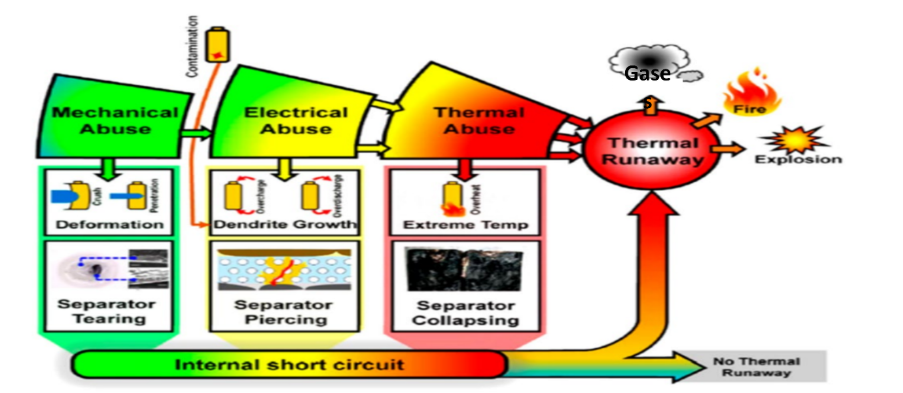
Q10: Can you run through how the batteries ignite again - what actually happen?
Q11: Would Lithium extinguishers be available as an automatic option and would they be effective in a scooter store for example, or will they be unlikely to control a fire as they batteries would be enclosed? In which case, would the small bursting type extinguishants be considered to be housed within a battery compartment itself?
_____________
We’d like to extend our sincere thanks to each of our key speakers for their insights during the webinar.
Be sure to sign up for updates on our upcoming webinars here upcoming webinars, and if you have any questions about the topics covered in this Q&A, feel free to reach out below. One of our fire safety consultants will be happy to assist you.